
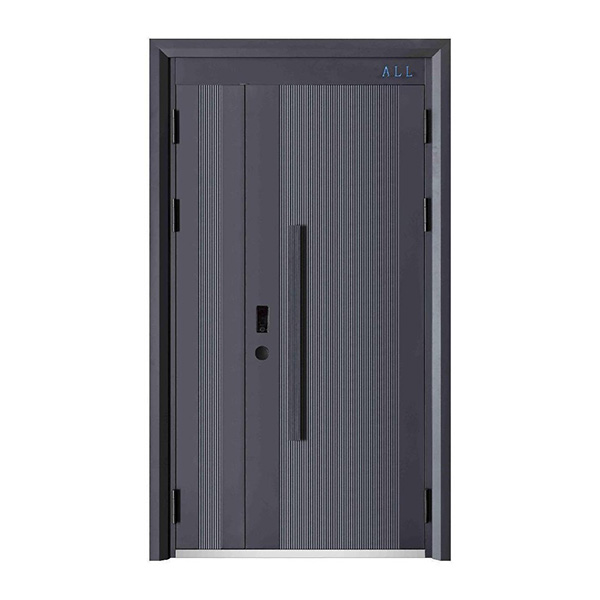
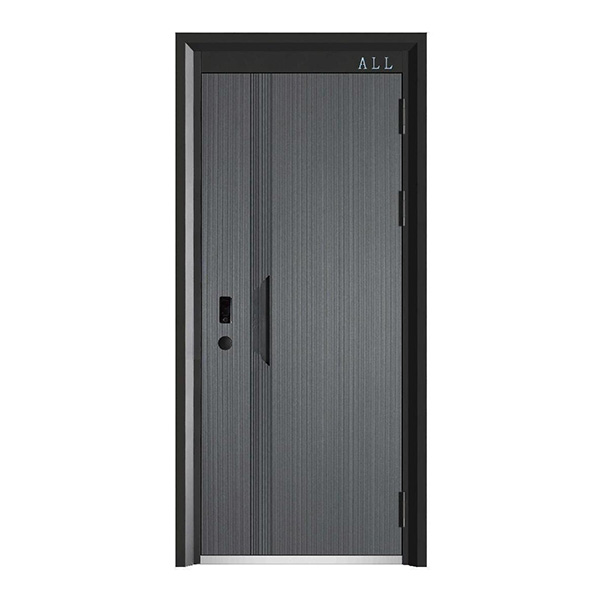
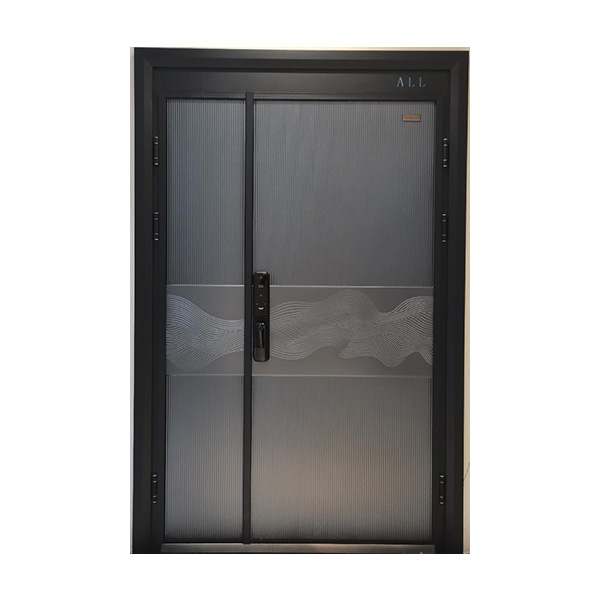
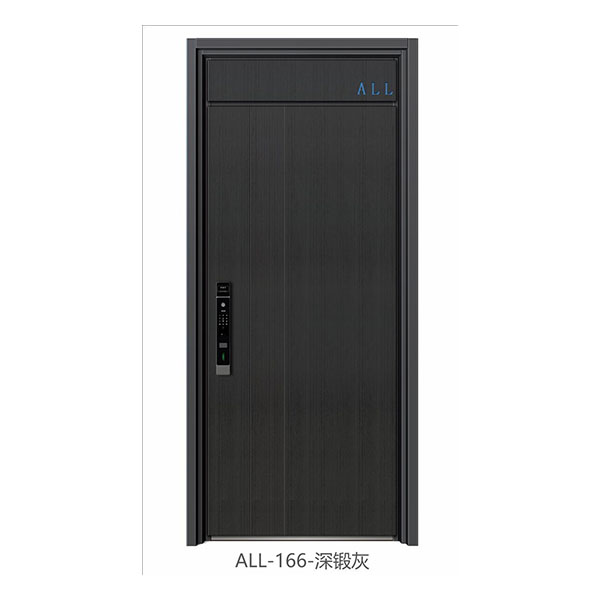
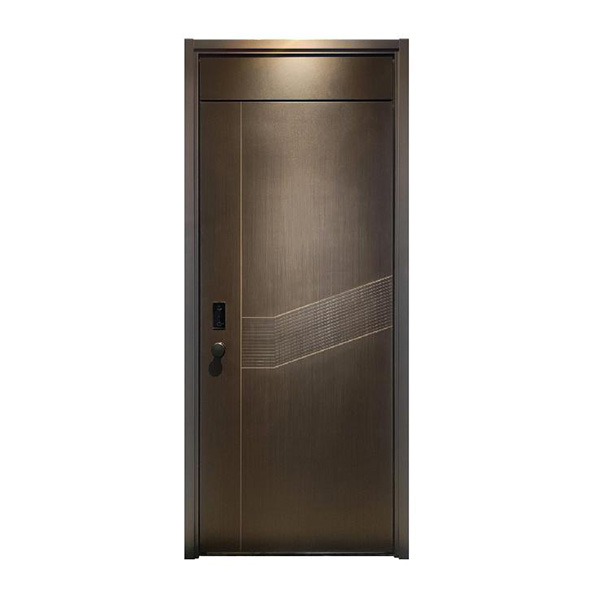
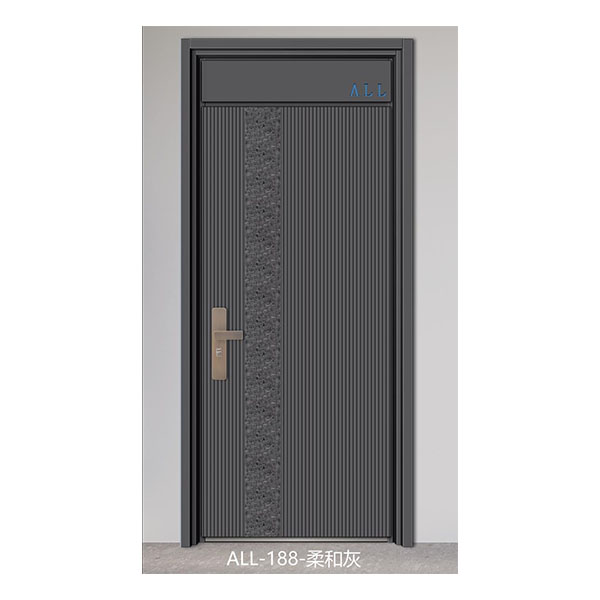
Forced-entry resistant armored doors are built for entrances where an ordinary steel door is not enough: a reinforced steel frame, a multi-layer steel leaf and a locking area that cannot be drilled or pried open in the minutes an intruder is willing to spend. This model uses heavy-duty cold rolled steel sheet with a reinforced steel frame and a high-performance core — aluminum honeycomb or rock wool — so the leaf resists impact without becoming too heavy for daily use. The lock area is protected by anti-drill plates and carries an advanced multi-point locking system, giving anti-pry, anti-impact and anti-deformation protection at the three points an attack usually starts: the lock, the hinge side and the leaf edge. Surfaces can be finished in solid wood veneer or a customizable aluminum panel, and the leaf is built with sound and heat insulation layers. Sizes and security levels are customized per project, with stable bulk supply and full export support.

| Parameter | Specification |
| Door Type | Armored Security Door (Forced-Entry Resistant) |
| Steel Sheet Thickness | 0.8–1.2 mm (leaf) / 1.5–2.0 mm (frame) |
| Door Leaf Material | Multi-layer Steel Construction + Cold rolled steel sheet |
| Door Leaf Thickness | 80mm-120mm |
| Surface Material | Zinc-Iron Alloy Sheet / Precision-Cast Aluminum Sheet / Solid Wood Veneer |
| Surface Coating/Finishing | PVDF / Powder Coating / Heat Transfer Printing |
| Filling Material | Honeycomb Paper / Rock Wool / Aluminum Honeycomb |
| Standard Size | 2050mm×860mm/960mm/1050mm |
| Lock System | Multi-point Lock / Smart Lock Optional |
| Opening Direction | Inward / Outward |
| Accessories | Multi-point Lock, Zinc Alloy Handle, Heavy-duty Hinges, Peephole, Doorbell, Rubber Seal Strip |
| Certification | ISO 9001 (as required) |
| Function | Soundproof, warmth preserved, anti-pry, anti-drill, moisture proof, against theft |
| Packing | EPE foam+carton box (Special package is available) |
| Application | Residential Houses, Apartments, Villas, Commercial Buildings |
| Customization | OEM & ODM Supported |
| Custom Options | Size / Color / Design / Lock / Surface Finish |
| Delivery Time | 20-25 days after 30% deposit received |
| Payment Terms | T/T (30% deposit, 70% balance before shipment) |
What Makes a Door Forced-Entry Resistant
A forced-entry resistant door is not a heavier version of a normal steel door; it is a door built so that each step of a break-in attempt fails at a different place. The frame is reinforced and anchored into the wall, because a leaf that holds while its frame bends is an open door. The leaf itself is multi-layer steel with a mineral or honeycomb core, 80–120 mm thick, so it resists impact and stays flat instead of deforming at the corners. The lock area carries anti-drill plates, since the cylinder is the fastest route in. The multi-point locking system drives bolts into the frame at several heights, which spreads the load along the whole opening rather than the middle. And the hinge side is reinforced as well, because prying the hinge edge is the quietest method of all.
Ballistic Resistance and Forced-Entry Resistance Are Two Different Tests
Buyers often use the words together, but they describe different attacks. Ballistic (bullet) resistance is measured by firing specified ammunition at a test panel, and it is expressed as a level under a ballistic standard. Forced-entry or burglar resistance is measured by attacking a complete doorset with tools for a set time, and it is expressed as a resistance class. A door can pass one and not the other, and the documents are different: a ballistic test is a panel test, while a burglar-resistance test has to cover the leaf, frame, lock and hardware as a set. This matters when a project specification mixes the two. If your tender states a resistance class or a ballistic level, send it to us — we will confirm what the specification requires, tell you which parts of the doorset the test must cover, and be straight with you about what can and cannot be documented for the order.
Armored Doors vs Luxury Armored Doors
Both pages describe the same construction family, but they answer different briefs. If the priority is protection — an entrance for a bank office, a cash-handling area, a residence in a city with a real break-in risk — the specification follows the resistance requirement, and the design is fitted around it. If the priority is a villa or a prestige building, the entrance is chosen for its appearance first: surface material, panel relief, colour and the matched finish of the facade, with the security construction built underneath. Our luxury armored doors cover that second brief, and we are happy to send both specifications so you can compare them line by line before you decide.
Documents to Request With Your Quotation
For a security door, ask for the drawing of the door and frame with the clear opening and wall anchor detail, the steel thickness and leaf construction written on the quotation rather than just in the catalogue, the locking system model and cylinder type, the hinge and reinforcement details, and the test or inspection documents for the resistance class your project requires. Packing photographs and a container loading plan are supplied before shipment, a certificate of origin is issued for customs, and third-party inspection is arranged through the body your project appoints.
Frequently Asked Questions
What does forced-entry resistant mean in practice?
It means the complete doorset — leaf, frame, lock area and hinges — is built to resist a deliberate attack with hand tools for a meaningful period. The practical difference on site is that the lock area is protected by anti-drill plates, the locking is multi-point, and the frame is anchored, so a single weak point does not open the door.
Do you supply ballistically tested (bulletproof) doors?
Ballistic protection is a separate specification from forced-entry resistance, and it has to be stated as a level before anything can be quoted. Tell us the level named in your project documents and we will confirm what we can supply and which test documentation can be provided for that order.
What leaf thickness and sizes do you produce?
The armored leaf is 80–120 mm thick, with 0.8–1.2 mm steel on the leaf skin and 1.5–2.0 mm on the frame. Standard sizes are 2050 mm high by 860, 960 or 1050 mm wide, and other openings are engineered to order in single or double leaf form.
What are the delivery time and payment terms?
Production takes 20–25 days after the 30% deposit is received, with the balance due before shipment by T/T. Smart lock options, surface materials and opening direction are confirmed on the drawing before production starts.
Related Reading
- Armored doors — the full range of security entrance doors, sizes and finishes.
- Luxury armored doors — the same construction, specified for villa and prestige entrances.
- What a steel door really costs landed — duty, freight and clearance broken down line by line.
Send us the opening size, the resistance level your project requires and the destination port, and we will reply with the door specification, the documentation we can provide and a quotation. Request a quotation.


